
The Anatomy of a VC Analyst Call: What to Really Expect
Sharvi Dubey
Jan 31, 2025
India's digital public infrastructure is at it again. After revolutionizing payments with UPI, it's now targeting the country's credit conundrum. But unlike UPI's meteoric rise, these new platforms are still finding their footing. Let's dive into what's really happening.
First, the players:
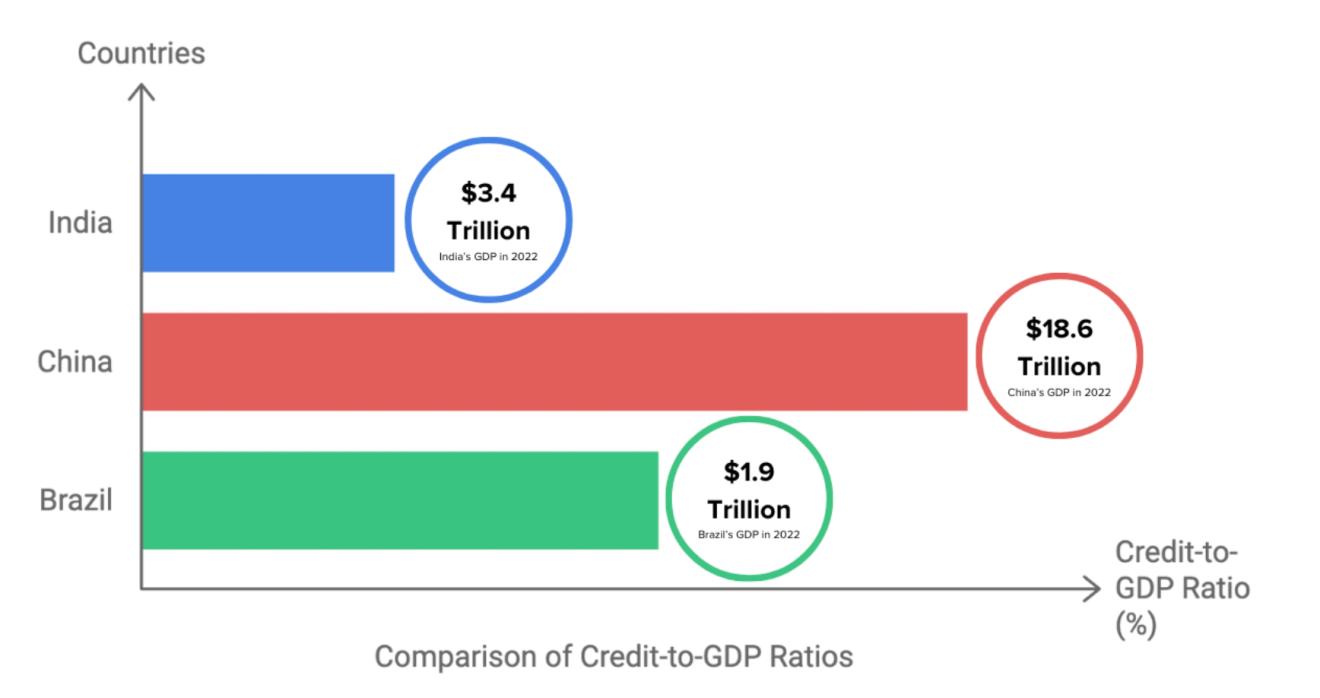
Why does India need this?
India's credit-to-GDP ratio stands at a modest 56%, compared to China's 182% and Brazil's 114%. This isn't just a number game. It means that for every rupee of economic output, India has less than half the credit availability of China. The implications? Stunted business growth, limited consumer spending, and a handbrake on economic potential.
The credit gap for MSMEs alone was estimated at $330 billion in 2019. That's not just a gap; it's a chasm. It means millions of small businesses struggle to get the capital they need to grow, innovate, and create jobs. In a country where MSMEs contribute 30% to the GDP, this is a critical bottleneck.
These platforms are the government's attempt to bridge this gap. While private players focus on profit-friendly segments, these initiatives aim to create a rising tide that lifts all boats. It's an ambitious play, reminiscent of UPI's transformative impact on digital payments.
Adoption Challenges and Lack of Transparency
But here's where things get murky. Despite the fanfare, concrete data on adoption and impact is scarce. ONDC, for instance, has been live for over a year, but finding reliable transaction volumes is like searching for a needle in a digital haystack. Even businesses integrated with ONDC seem to be in the dark about actual usage. It's a black box that's raising eyebrows.
OCEN, too, is still more promise than practice. While the framework exists, widespread adoption remains elusive. The government's silence on pilot data isn't helping. It's like they've built a shiny new expressway but forgot to put up the road signs.
Contrast this with UPI's rollout. Remember the armies of bank representatives descending on local markets, armed with QR codes and smartphones? That wasn't just enthusiasm; it was a coordinated ground game. Banks conducted over 100 million customer engagements to drive adoption.
Moreover, the government launched a massive digital and television campaign to promote UPI. The "Digital India" initiative became a household name, with celebrities endorsing digital payments in prime-time advertisements. The campaign, which ran across multiple languages and media platforms, reached an estimated 400 million Indians. It wasn't just about awareness; it was about building trust in a new financial ecosystem.
The future needs to be credit-driven
These new credit platforms need a similar push. You can't expect a small business owner juggling a dozen responsibilities to spontaneously embrace digital credit. It requires handholding, education, and incentives. The government needs to shift from infrastructure-building to adoption-driving, and fast.
The potential is undeniable. If India can replicate UPI's success in credit, it could unleash a wave of entrepreneurship and consumption that transforms the economy. But potential alone doesn't pay bills or fund businesses.
As founders and investors, we need to watch this space closely. These platforms could redefine how businesses access capital and how consumers spend.
If you know of businesses using ONDC or OCEN infrastructure, please write back to us - we’d love to hear real stories and understand it’s impact deeply!
Sharvi Dubey
Jan 31, 2025

Sharvi Dubey
Jan 17, 2025
Sharvi Dubey
Nov 20, 2024
Radika Agarwal
Oct 13, 2025
Arjun Malhotra & Amani Chowdhry
Jul 25, 2025
Arjun Malhotra & Amani Chowdhry
Jul 4, 2025
Stay Ahead of the Curve
Contact
Find the team member whose focus overlaps with what you’re building, or someone we both know who can introduce you.